 Okareer Lens
01 · UNDERSTAND THE ROLE
See what this role is likely to ask you to prove.
Okareer interprets the role and surfaces the capabilities, decisions, and evidence the interview may evaluate.
EVIDENCE-FIRST INTERVIEW PREPARATION
Know what this role will test, prepare the evidence that matters, and walk into the real interview knowing exactly where you stand.
Interview Prep Promise
We're confident Lens will meaningfully improve your interview preparation. If it doesn't, get 50% back.
Learn more →Start free: build one interview target, then practice when you're ready.
Start by knowing what the role needs, then prepare the experiences that can prove it.
THE OKAREER FLOW
Understand what the role may test, prepare the evidence you want to use, then see what your answers actually prove—and strengthen what still doesn't.
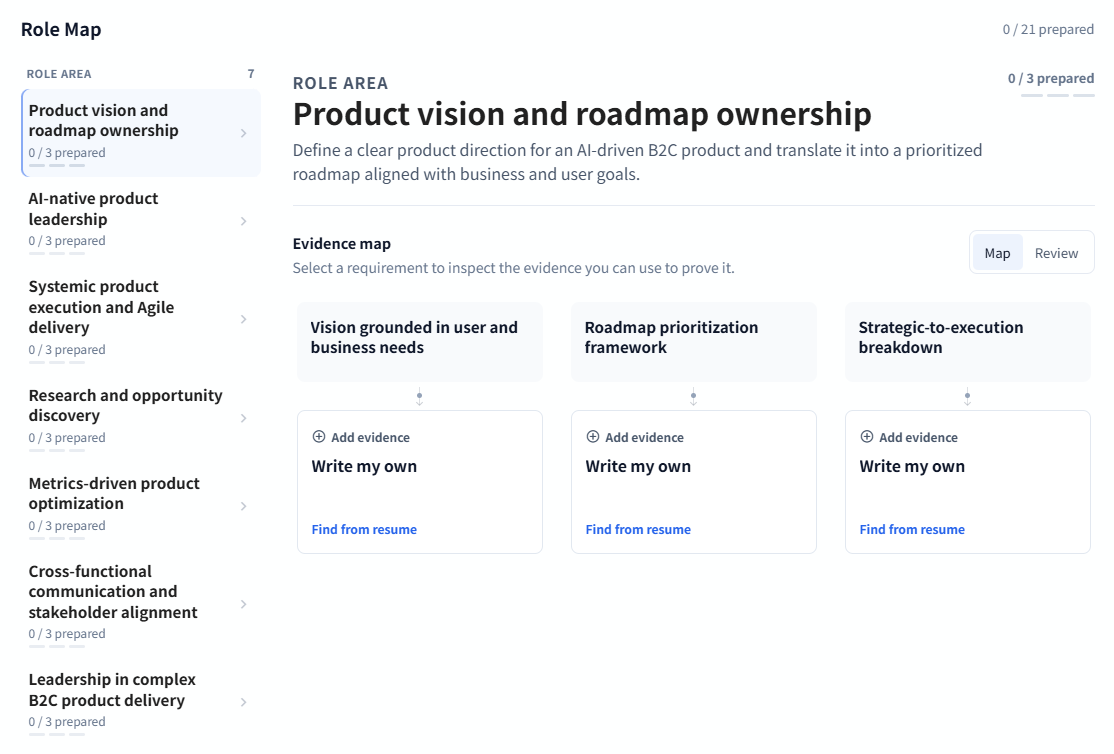
01 · UNDERSTAND THE ROLE
Okareer interprets the role and surfaces the capabilities, decisions, and evidence the interview may evaluate.
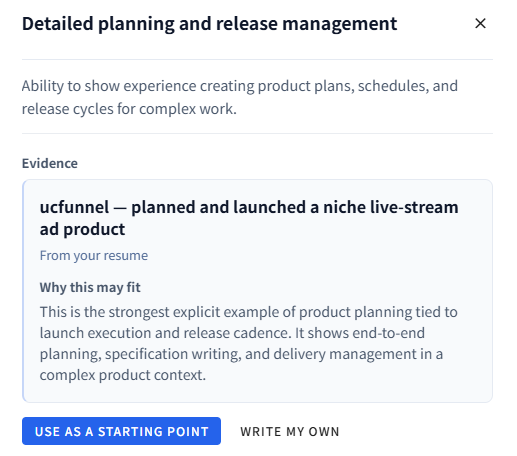
02 · PREPARE YOUR EXPERIENCES
Add the projects, decisions, results, and examples you could use to prove each area. You don't need to script an answer—just know which real experiences you want to draw from.
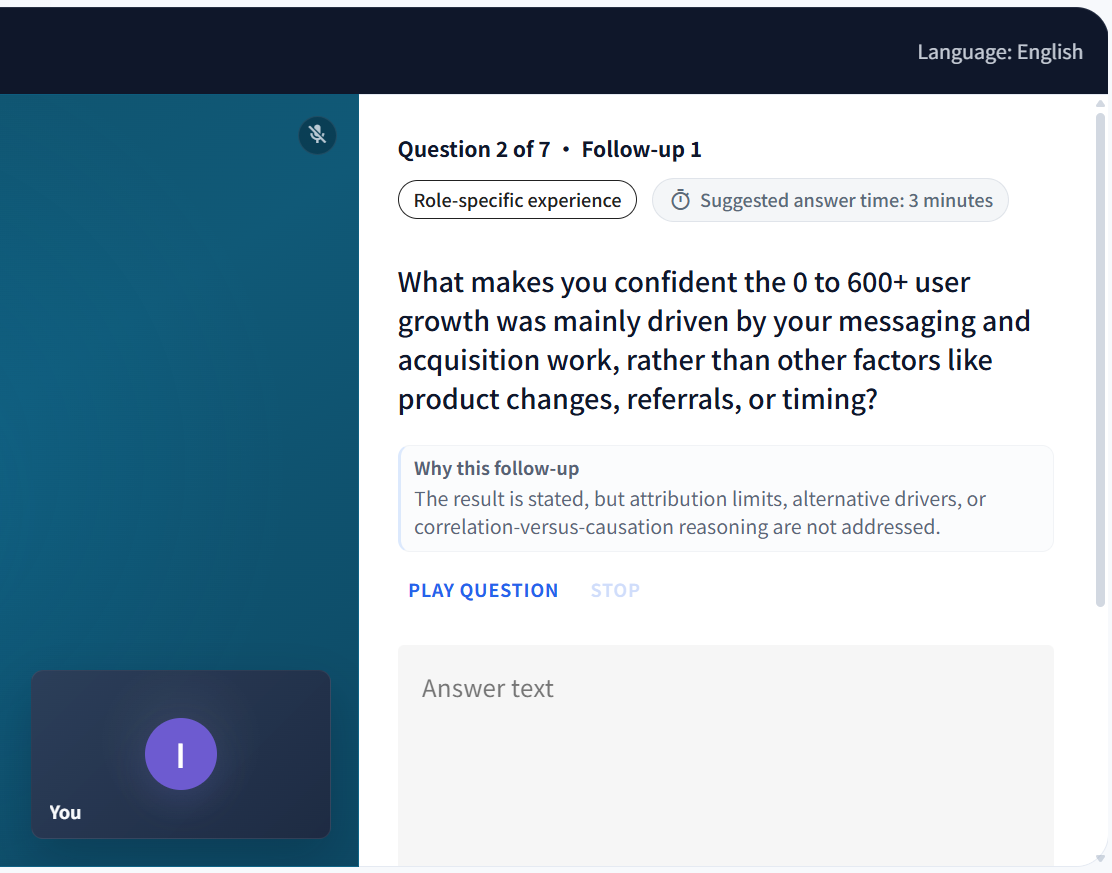
03 · TEST YOUR ANSWERS
Answer realistic role-specific questions, handle follow-ups, and see whether the evidence you meant to show actually came through.
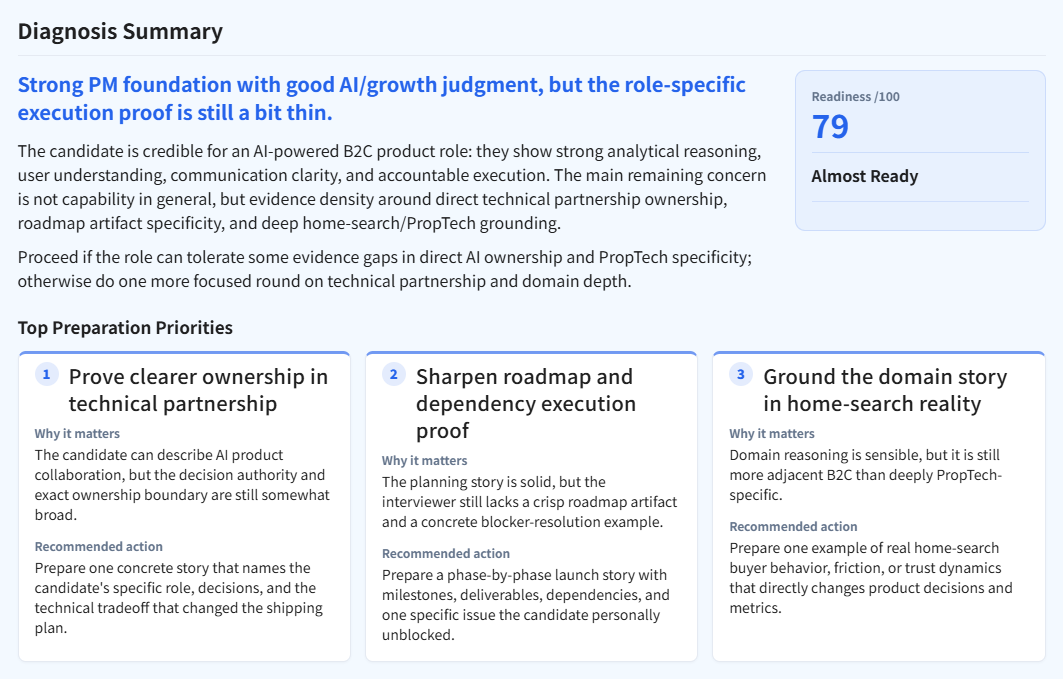
04 · SEE WHAT CAME THROUGH
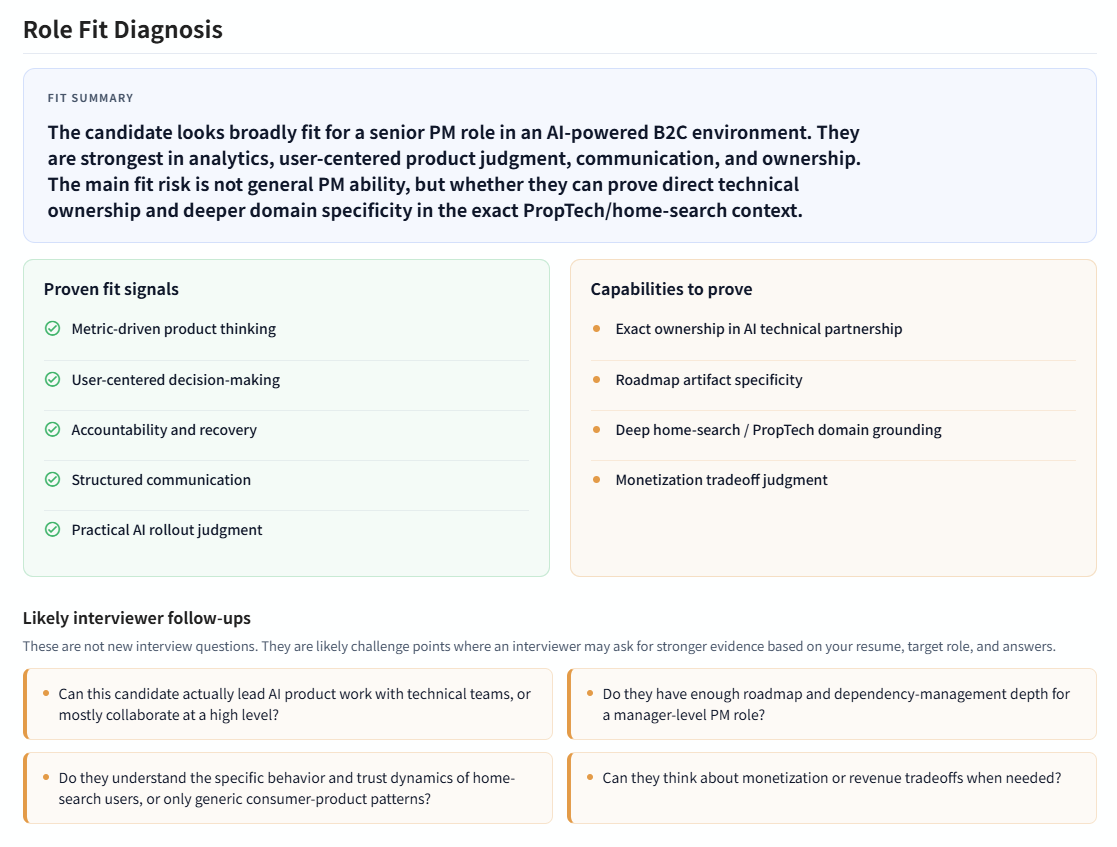
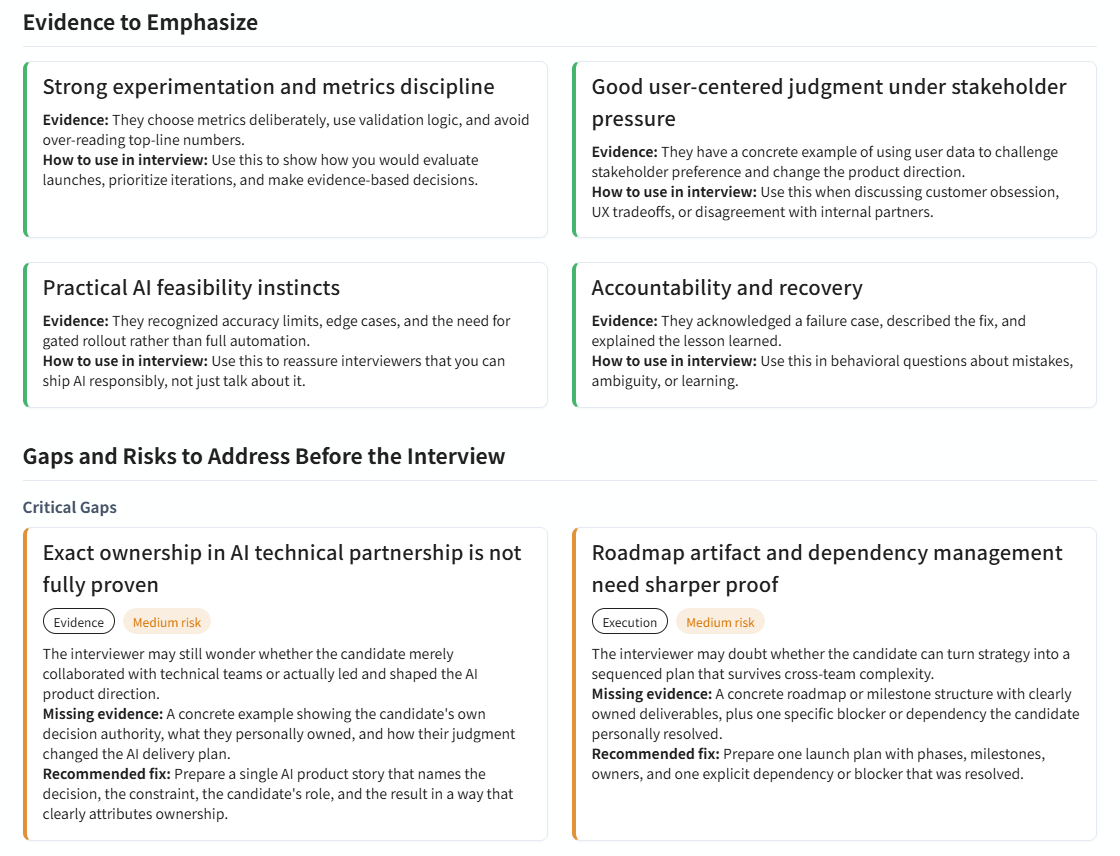
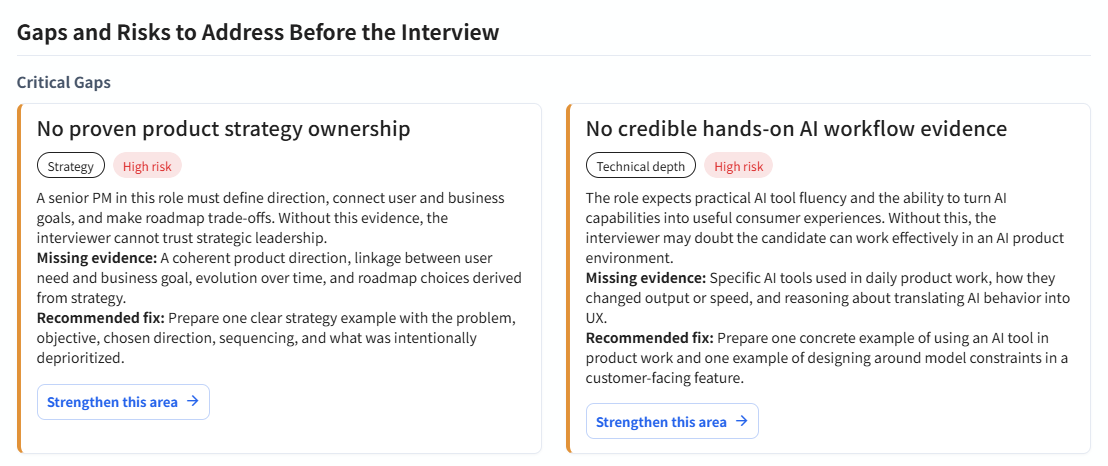
See what your answers established, where important evidence is still weak or missing, and what deserves more preparation before the real interview.
Strengthen a specific gap, then recheck it with focused questions to see whether it now holds up.
INTERVIEW MODES
Different interview rounds look for different signals. Choose the mode that matches what you want to test.
Overall role readiness
Evaluate your overall readiness, role fit, answer quality, risks, and preparation priorities.
Role-specific craft and judgment
Go deeper into role-specific skills, functional judgment, and the signals interviewers expect for your target role.
Influence and cross-team collaboration
Evaluate stakeholder alignment, conflict handling, influence without authority, trade-offs, and decision-making across teams.
What early users told us after preparing for real interviews with Okareer.
“Some questions were very close to what I was actually asked in my interview.”
I used this product to prepare for an upcoming interview. Looking back after the actual interview, I felt the questions and follow-ups were high quality and generally well aligned with the role.
“The most valuable part was seeing the gap between my performance and the role I wanted.”
It showed me where I needed to be more specific in my responses and how to get there.
“I didn't realize interview prep could feel this structured.”
Okareer Lens helped me break everything down the same way I would with a complicated problem at work. It gave me a much clearer sense of what to focus on, and I felt a lot more confident going into the interview.
“Seeing the resume match was really helpful.”
Sometimes it can be hard to connect competencies from my resume to a job requirement when they don’t appear to directly align. Lens helped make those connections clearer.
“I would use this to prepare if I had an important interview coming up.”
The follow-up questions felt especially valuable, and they are something many AI interview tools still do not handle well.
“It made me realize I needed much more specific examples for this interview.”
Lens connected my resume to the job description, and the interview questions felt really realistic. The gaps it identified—especially where I needed stronger examples—felt accurate.
“The diagnosis report was balanced — not overly flattering, and not overly critical.”
The overall experience was useful and helped me rethink how I was answering interview questions.
“Compared with ChatGPT or Claude, this felt more objective.”
When I use ChatGPT or Claude for a long time, it can feel like the model starts to overfit to me. This platform's evaluation and summary felt more complete and objective.
Feedback from real Okareer Lens user interviews. Quotes lightly edited for clarity.
Start with your target job, map what you may need to prove, and practice when you're ready.